
Typecasting
A high school counselor said the loan would outlive her career. The milk carton agreed. She became a librarian anyway.
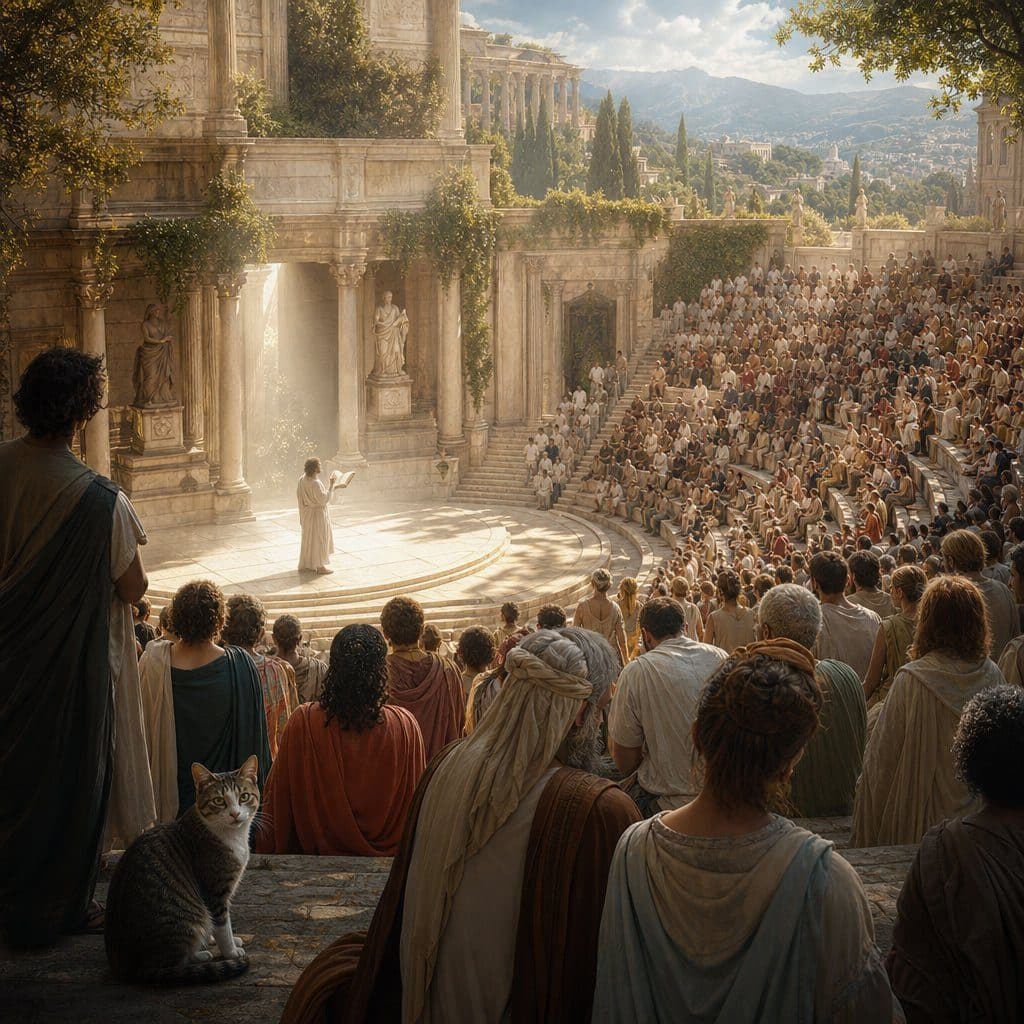
An actor in training prepares for many roles: portraying villains and heroes with physical strength as much as total stillness and a raised eyebrow. They start out going to auditions, taking on minor supporting characters, hoping to land that leading role, break it big, reach the big audiences.
Just being able to portray one character, getting stuck in typecasting, is not something any actor wants, which is why they welcome early opportunities to show and train range. Some actors have no formal training at all. They're simply naturals, learning on the job, driven by some internal force to express and perform. It's a versatility that's hard to teach, and even harder to prove, until you're standing in the role.
An MSc in Library and Information Science is much the same. It isn't a narrow credential.
You can play wildly different parts with it, and that's a feature, not a contradiction.
Some of the best library professionals I've worked with over the years "on stage" are exactly that kind of natural too: untrained, doing the job on instinct and pure will. Supporting them on their journeys has been one of the most fulfilling parts of my career. Still is.
Over more than 25 years, I've held roles under wildly different titles: Information Specialist, Research Manager, M&A Advisor, National Library Coordinator. Underneath, they all drew on the same core skill: finding, evaluating, and synthesizing information, deployed in totally different rooms, from a management consultancy to a private equity firm to a Swedish school.
I landed my first big role early, at a management consultancy where pattern-recognition was the whole job. From there I moved deeper into the genre: high finance, then private equity. For close to seventeen years, "the hunt" was genuinely thrilling: information asymmetry, jumping down rabbit holes, puzzling out anomalies, high stakes, smart and ambitious colleagues, a great salary. But I never quite believed it was as important as the paycheck implied.
Throughout my career, I've been questioned, and have had to explain, more than once, that my fundamental skill set hasn't changed since I graduated at the turn of the century. It has only deepened, through experience and know-how. To be honest, it was never about my own competence; I have more than two decades of proof of that. It's about legitimacy: being told, more than once, that I'm "not really a librarian," and about the profession's own prestige gap, where identical skills pay wildly different amounts depending on which building you use them in.
This started before I'd even begun. In high school, when I told a study counselor I was thinking of becoming a librarian, she laughed, right in my face. She typed something into her computer, looked up at me over her glasses, dangling from hot pink retainer straps, and told me that according to CSN, at the wage levels and study lengths on offer, I wouldn't have my student loan paid off until I was 82. "We're lucky to live in a society that writes debts off when we retire," she said."Lucky indeed," I thought.
The verdict was confirmed the next morning, on the back of the milk carton: a whole list of careers to forget about. I only remember one of them. The one at the top.
So I became a librarian. And I paid off my student loan before I turned 40.
For years, I didn't so much leave one role for another as perform two at once: still freelancing as an M&A advisor while stepping fully into the world of school librarianship, eventually directing what amounted to a production spanning 48 schools as National Library Coordinator. Nobody tells a working actor they're "not a real actor" for going from the big screen, to eight shows a week, to something shot in someone's basement. Versatility is the point, not a betrayal of craft. Same skill. Different stage entirely.
…and what about now? It's easy: it's the indie film. Small ensemble, high risk, low budget, and though the dedication is like nothing I've ever seen, we still don't know if we'll reach the big screen at all. We know we have to work hard and deliver but we also believe that we have real red carpet potential.
La Fin
Notes
- Footnote 1.✦ CSN — Sweden's national student loan authority, which estimates repayment timelines based on projected earnings. ↩
- Footnote 2. Arla — Sweden's largest dairy cooperative, which for years printed career guidance lists on the backs of its milk cartons. For a certain generation of Swedish school kids, that was about as official as career advice got. ↩
Filed under
- Field Notes
- career
- librarianship
- typecasting
- career versatility
- information science
- professional identity

Librarian
A librarian who wrote her dissertation on integrated library systems, and now helps build one. She is making sure the shift to AI is threaded with care, so it works for librarians and the communities they serve, not in place of them.